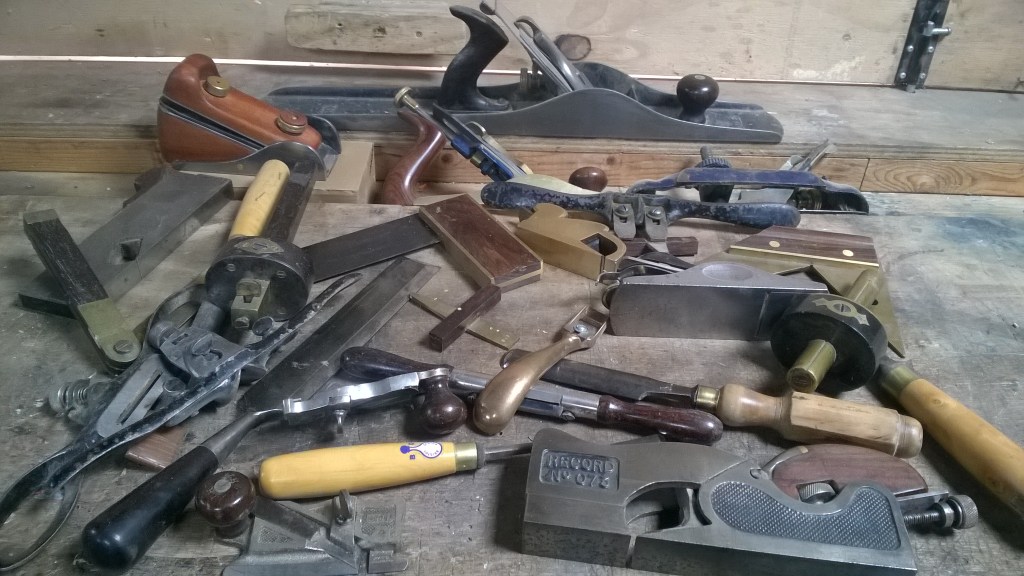
I do like tools, the older the better. For the curious there’s a few classics above. At the back a 1911 No8 Stanley plane, with a right/left pair of rebates by the same maker at bottom – either side of the Bristol Design (blue label) boxwood handled gouge. The Record 075 plane had suffered the fate, well before my time, of so many others, by being dropped and landing on the handle – which being cast – snapped like a carrot. I’ve fashioned a rosewood infill and the plane works beautifully. Another of my projects to bring life back to a broken tool is at top rear left. An old 41/2 Stanley snapped off at the mouth now repurposed as a trimming plane for plugs. It’s got some weight in it and works very well (if you’re orientated with the grain). Many of these tools were used in the making of the items below.
Sideboard
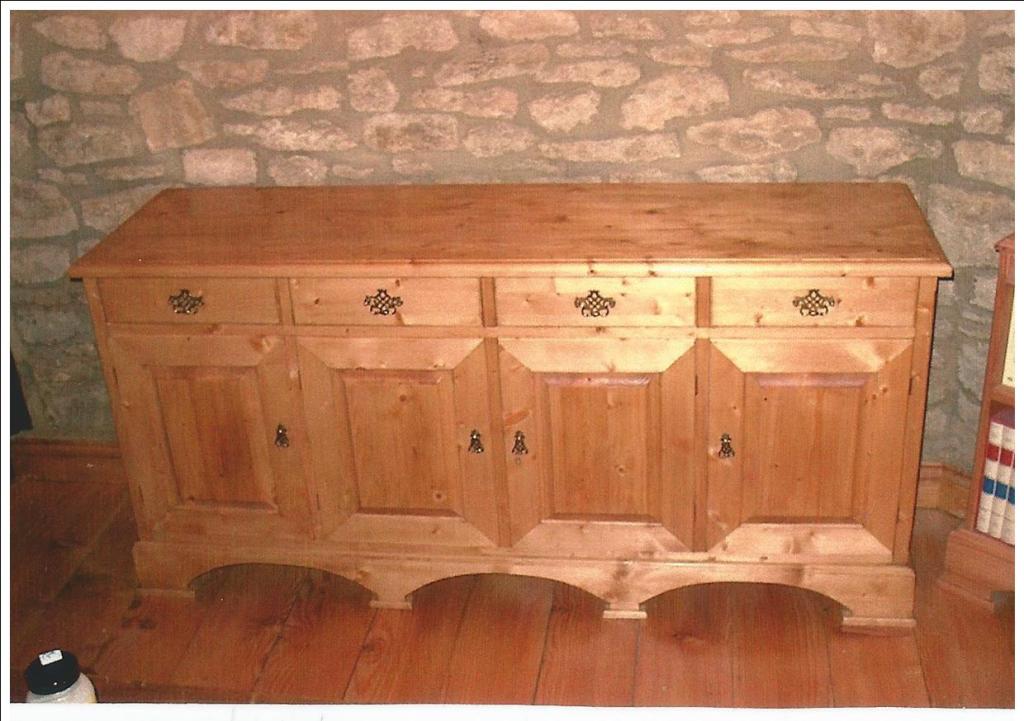
I made this quite a few years ago and it’s still going strong. Looks exactly the same, more importantly the draws and doors all function exactly as they did when the item was finished. At around 5 1/2 ft long by 19inches deep it’s fairly substantial – especially when it’s packed with drink, which is it’s role in life. The doors are mitred frames with fielded panels inserted. I do have rail and stile* cutters, but firstly you don’t need expensive cutters to make a nice door, and secondly I didn’t want the ‘kitchen door’ look.
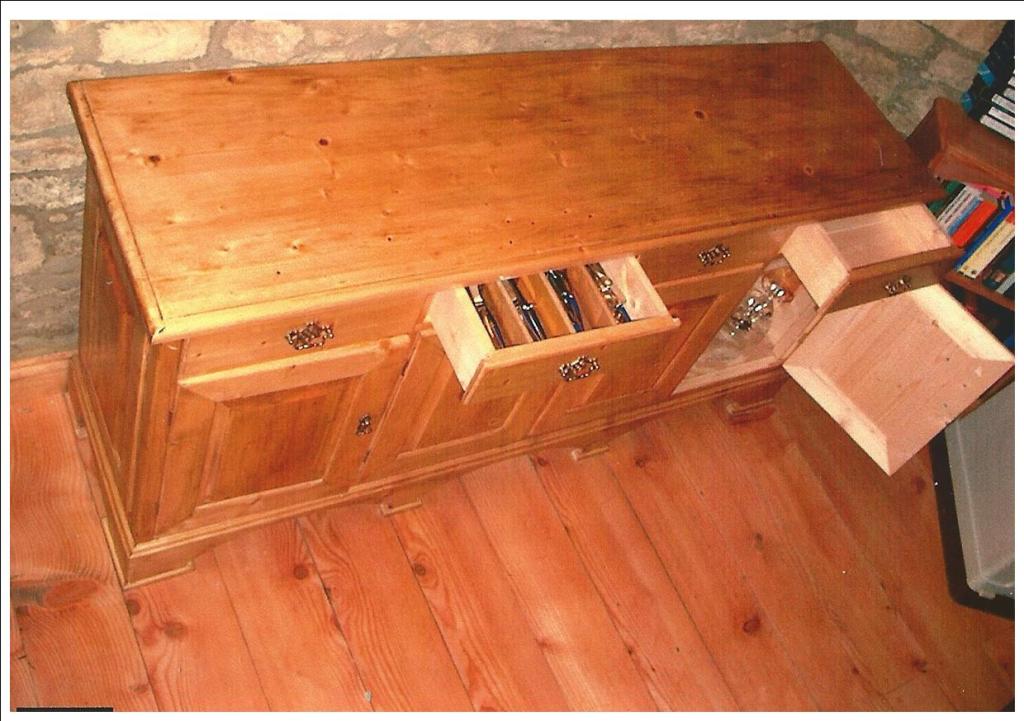
As it can be seen one drawer was made specifically for cutlery. Construction wise it’s not that complicated. A full length/width frame at the bottom, uprights at corners and cross members to support the drawers. Then it’s just a matter of fitting the floor, sides and back. Add drawers, doors, top and the base. Finished. Sounds too simple perhaps, but that’s the basic journey you take.
Note – The wooden flooring you can see is Douglas Fir. This was bought from a salvage yard rough sawn (300ft). It came from a bridge in the Dezives area that had been built during WW2 after the previous one was bombed. The timber was shipped from Canada. It’s screwed to a frame on the floor, the holes covered with hundreds of plugs. I cut them all! Then the floor sander did its work. I think it was worth it, It looked and smelt lovely.
Pew Seat
Despite the name this isn’t a huge piece of furniture at around 4ft long (1.2m). The timber all came from shelves recycled from a larder cupboard from the 1950’s. New regulations meant that wood was out – stainless steel was in. Lucky for me!
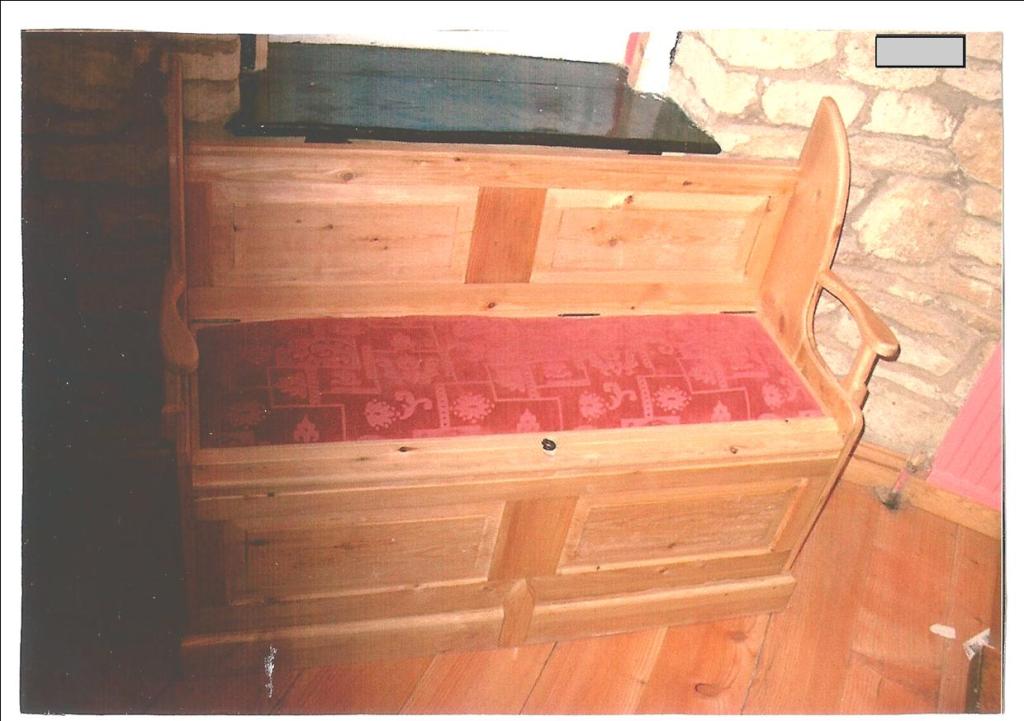
Apologies for the photo but it was the only one with a full view. Again designed from scratch. This was made without using any power tools. I like to make things hard for myself. The panels – two front and two at the back – are all fielded* by hand using a rebate plane. The whole thing made just with saw, plane and chisel. It does have a certain crudity about it, but that seems in keeping with similar items made a few centuries ago.
* I could spend time explaining this but i’ll be easier if you google it – you get pictures and stuff!
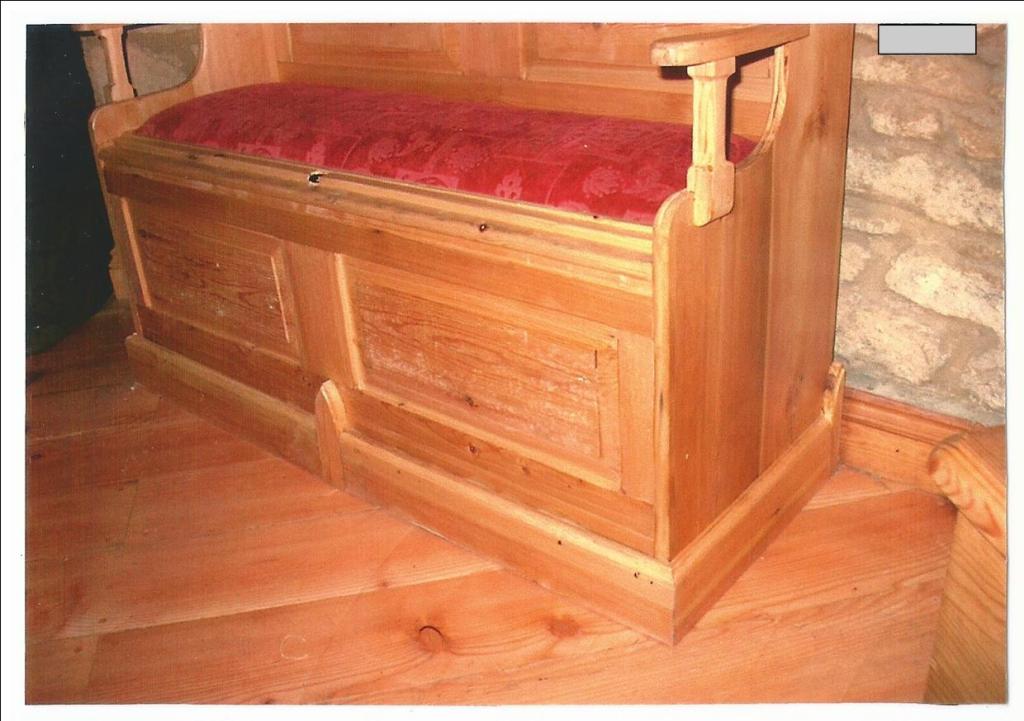
There is a bit of the ecclesiastical about it with the central ‘Bishop’s mitre’ motif which is mirrored on the sides at the back. In fact the front item is covering a large fault in the timber. I didn’t have any more and wanted to remain true to the original goal, and not use ‘fresh’ timber. Improvisation of design. I think it adds, not detracts. The armrest parts and minimal decoration were also hand worked.
Music Cabinet
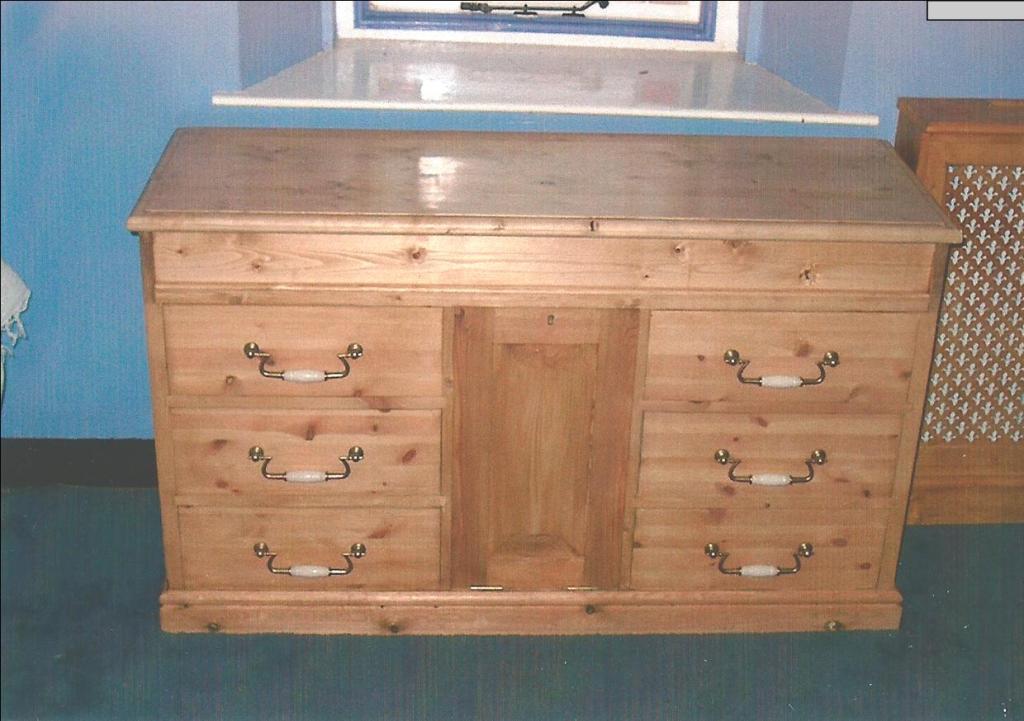
This was made to house CD’s, of which I’ve got hundreds. How very old fashioned I hear you say. Apparently a lot of people still acquire them as it gives them something to fight over when they split up. Can’t do that on Spotify! A lot of the material used was from an old 70’s wall unit and some odd bits I had lying about in my firewood collection. The top was bought as a table top. Due to repurposing most of my items don’t cost more than around £50/$60, including hardware.
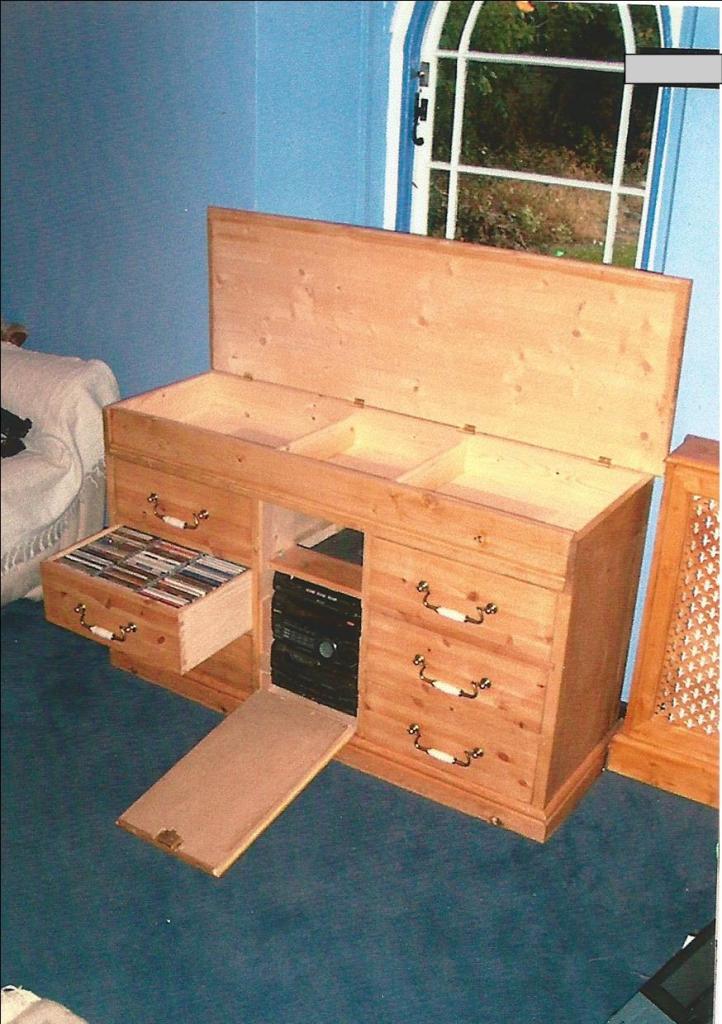
Pretty simple construction again. A box with drawers in it, with a shallow box on top plus a lid. Designed to fit a Sony midi system but they’re all a standard size – ish. The gap above the ‘Sony’ fits a centre speaker with a pre amp behind it for the deck that fits in top right ‘hole’. The left hand one holds LP’s – laying flat obviously – with the centre gap for headphones and one of those poxy little brushes for pretentious people who spend hours wiping their discs in circular motions – Quick, call the double entendre police!
The only problem with this is the crappy base, which I intend to revisit. I meant to make it match the other items – a friend of mine said the base of the other pieces look like the Avignon bridge so that’s what I call it. I’ve not seen the bridge in person, however I looked it up online and seemingly half of it’s missing. Doesn’t bode well.

